The BMW S1000RR is a machine defined by performance, and every component should reflect that standard, including its lighting. While the stock headlight on earlier generations does an adequate job, it falls short of what modern LED technology can deliver. An LED headlight upgrade offers brighter output, lower power draw, longer lifespan, and a whiter, more modern appearance. For riders who spend time on unlit roads or simply want their bike to look as sharp as it performs, this is one of the most worthwhile modifications available. This guide walks through the key considerations and steps for upgrading the S1000RR headlight to LED.
Understanding the S1000RR Headlight
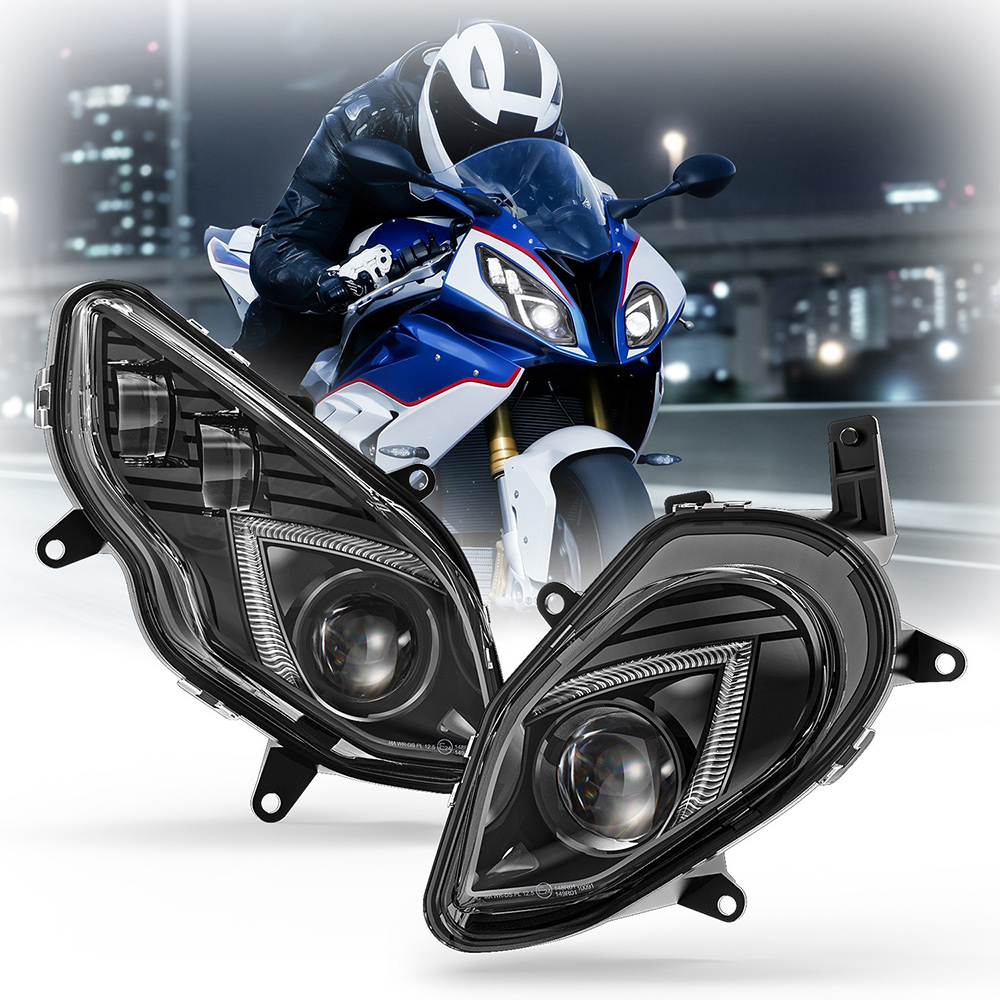
The BMW S1000RR features a distinctive asymmetrical headlight that has become a signature of the model. From 2009 through 2018, the housing splits its functions: one side contains a projector-style low beam, while the other side uses a reflector-based high beam. This arrangement means the two sides behave differently when fitted with aftermarket bulbs. The projector side is naturally compatible with LED upgrades because its lens and cutoff shield focus the light into a clean, controlled beam. The reflector side is less forgiving, as reflector housings are designed around the specific filament position of halogen bulbs. Dropping an LED bulb into a reflector can scatter light and create glare for oncoming traffic. On the 2019 and later models, BMW moved to a full LED headlight assembly with integrated daytime running lights, so those bikes already have modern lighting and require no upgrade. For older models, understanding this split design is essential to choosing the right upgrade path.
Choosing the Right LED Bulbs
Not all LED bulbs are created equal, and the S1000RR demands quality. Look for bulbs that use high-output LED chips positioned to mimic the filament location of the stock halogen bulb, which preserves the beam pattern. A copper or aluminum heatsink with an active fan is important for heat management, as LEDs generate heat at the rear of the bulb rather than projecting it forward. Canbus compatibility matters too, since the S1000RR's electrical system monitors bulb resistance and may trigger warning lights or flickering if it detects an unfamiliar load. Many quality LED bulbs include built-in resistors or canbus modules to prevent these issues. Color temperature around 5000K to 6000K offers the best balance of brightness and visibility in poor weather.
Installation Steps
Begin by removing the side fairings to access the rear of the headlight housing. Disconnect the battery negative terminal before starting any electrical work. Remove the stock bulb from its socket, being careful not to damage the connector or the housing. If the LED bulb includes a separate driver or heatsink, mount it in a location protected from moisture and vibration. Insert the LED bulb into the socket, ensuring the chips are oriented correctly, usually with the LED chips facing the sides of the reflector or projector. Reconnect the wiring, secure all connections with dielectric grease, and test the light before reassembling the fairings. Check that both low and high beams function correctly and that no dashboard warnings appear.
Aiming and Testing
After installation, the headlight must be aimed properly. Park the bike on a level surface facing a wall about ten to fifteen feet away. Turn on the low beam and observe the cutoff line. It should sit slightly below the height of the headlight center, ensuring the beam illuminates the road without blinding oncoming drivers. Adjust the vertical and horizontal aim using the adjustment screws on the housing. Take a nighttime test ride to confirm the beam reaches far enough ahead and that the pattern is even across both sides. If the reflector side produces excessive glare, consider reducing the bulb output or adding a small shield to control the scatter.
S1000RR Headlight Upgrade
An LED headlight upgrade is one of the simplest and most effective improvements you can make to the S1000RR. It sharpens the bike's appearance, improves nighttime safety, and reduces the electrical load on the charging system. With careful selection of quality components and attention to beam pattern and aiming, the upgrade delivers results that are immediately noticeable every time you ride after dark.